Updated September 17, 2026: CDC has declared the outbreak over. The final Cyclospora outbreak linked to Taylor Farms de Mexico iceberg lettuce included 12,883 illnesses in 21 states, 570 hospitalizations and two deaths. The last reported illness onset was August 17, 2026.
The outbreak included people exposed to processed Taylor Farms lettuce through multiple restaurant, retail and foodservice settings, including people who previously reported eating at Taco Bell. CDC says the contaminated lettuce is no longer available in stores or restaurants and there is no current risk of getting cyclosporiasis from this source. FDA’s investigation into how the lettuce became contaminated is still ongoing.
People who developed prolonged or returning watery diarrhea after eating at Taco Bell, or after eating recalled bagged lettuce at home, should seek medical care and ask whether their stool test includes Cyclospora. For continually updated legal and evidence-preservation guidance, read Pritzker Hageman’s Michigan Cyclospora outbreak update, and see their account of how the 2026 Cyclospora surge developed nationally.
How Big Is the 2026 Cyclospora Increase?
CDC surveillance data show 19,883 laboratory-confirmed cyclosporiasis cases acquired in the United States, with symptom onset during the 2026 cyclosporiasis season of May 1 through August 31, 2026. Those cases include 1,064 hospitalizations and two deaths and were reported in 49 states plus the District of Columbia. CDC last updated those figures on September 15, 2026.
CDC is also reviewing 9,765 laboratory-confirmed cases to determine whether they were acquired domestically or during travel, plus at least 6,594 additional reports that are not laboratory confirmed or remain pending interview or submission. The national surveillance total includes the Taylor Farms outbreak as well as illnesses that were not linked to it.
Michigan outbreak data separately show 14,718 cases. As of September 3, 2026, 366 reported cases indicated that they had been hospitalized, and two deaths have been identified. CDC reports that the outbreak’s two deaths were in Michigan, so these are the same two deaths counted above and not additional ones. Michigan and CDC use different case definitions and reporting schedules, so these totals overlap and should not be added together.
What Food Is Linked to the Taco Bell Outbreak?
CDC and FDA linked the outbreak to processed iceberg lettuce from Taylor Farms de Mexico. On July 17, Taylor Farms de Mexico recalled all iceberg lettuce sourced from central Mexico after federal traceback converged on the supplier.
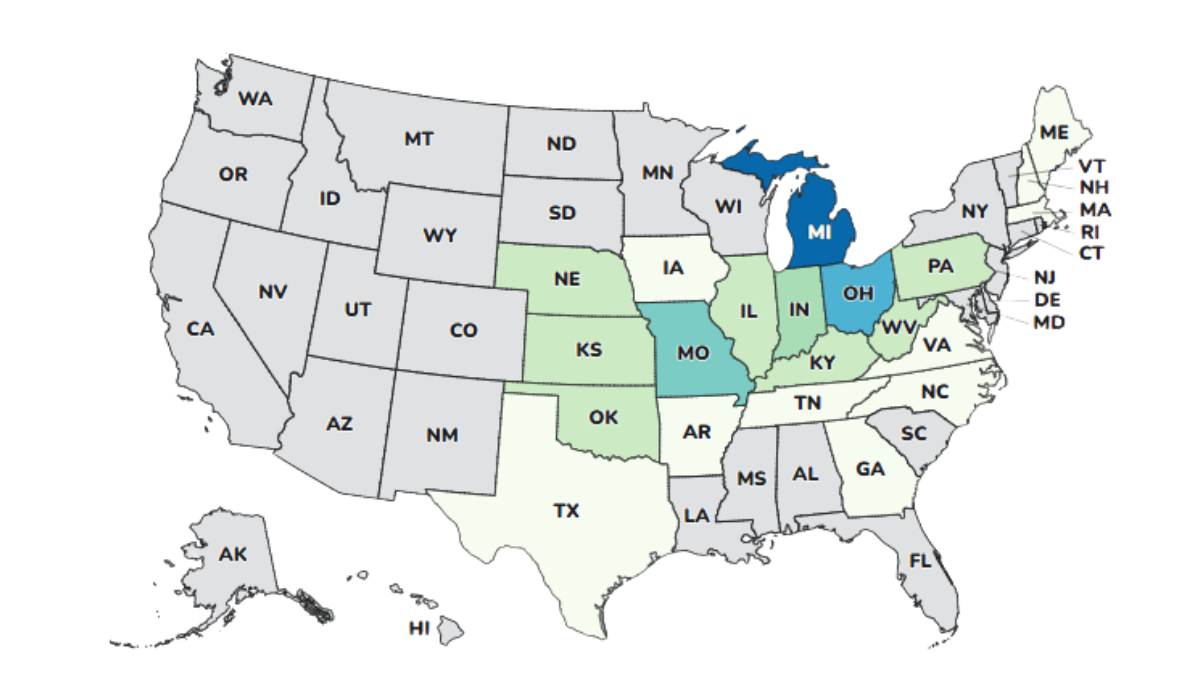
FDA’s final outbreak update reports 12,883 illnesses, 570 hospitalizations and two deaths in 21 states. Illnesses were reported in Arkansas, Georgia, Iowa, Illinois, Indiana, Kansas, Kentucky, Massachusetts, Maine, Michigan, Missouri, Nebraska, New Hampshire, North Carolina, Ohio, Oklahoma, Pennsylvania, Tennessee, Texas, Virginia and West Virginia. The last illness onset was August 17.
FDA has completed onsite inspections and sample collection at lettuce growers and the processing facility in Mexico. Analysis of those samples is pending. FDA says all recalled iceberg lettuce related to this outbreak is off the market, but its investigation into how the contamination occurred is still ongoing.
Identifying the supplier does not settle who else may be responsible. The restaurants and retailers that served or sold the recalled lettuce have not been cleared by the naming of a supplier, and exposure was not limited to one restaurant chain.
North Carolina is also investigating a much broader statewide increase in cyclosporiasis. NCDHHS says that broader increase does not appear associated with the Taco Bell outbreak, although some North Carolina illnesses were included in the final 21-state Taylor Farms lettuce outbreak. Read our separate North Carolina Cyclospora outbreak update for the state-specific case count and exposure signals.
Is There a Lettuce Recall?
Yes. On July 17, 2026, Taylor Farms de Mexico voluntarily removed all iceberg lettuce sourced from central Mexico from the U.S. market because of possible Cyclospora contamination.
FDA confirms recalled foodservice distribution in 31 states: Alabama, Arkansas, Connecticut, Florida, Georgia, Iowa, Illinois, Indiana, Kansas, Kentucky, Louisiana, Massachusetts, Maryland, Maine, Michigan, Missouri, Mississippi, North Carolina, Nebraska, New Hampshire, New Jersey, New York, Ohio, Oklahoma, Pennsylvania, South Carolina, Tennessee, Texas, Virginia, Wisconsin and West Virginia. FDA says product may also have reached additional jurisdictions.
The recall includes products distributed to restaurants, retailers, and other foodservice customers. It also includes the following Marketside products sold at select Walmart stores:
- Marketside Iceberg Salad, 12-ounce and 24-ounce bags, with Best If Used By dates from July 18 through August 3, 2026.
- Marketside Shredded Lettuce, 8-ounce and 16-ounce bags, with Best If Used By dates from July 18 through August 3, 2026.
The best-by dates have passed, and FDA says the recalled lettuce should no longer be available in stores or restaurants. Select Marketside-brand products had been sold at Walmart stores in 15 states during the recall period.
What is cyclospora, and why is it so hard to trace?
Cyclospora is a microscopic parasite (Cyclospora cayetanensis) that causes an intestinal illness called cyclosporiasis. People get it by swallowing food or water that has been contaminated with human feces, often through produce irrigated or washed with tainted water. Unlike many foodborne germs, the parasite generally needs days to weeks outside the body before it can infect someone, which is why Cyclospora is rarely spread person to person and why outbreaks are notoriously difficult to trace back to a specific food. Pritzker Hageman’s food safety team explains the disease and the legal issues it raises in this overview of cyclosporiasis and cyclospora lawsuits.
Another complication: standard stool tests do not detect Cyclospora unless a doctor specifically orders testing for it. That means many cases go undiagnosed, and the real number of people sickened in this outbreak is almost certainly higher than the official count. The CDC keeps general guidance on the illness on its cyclosporiasis information page.
Symptoms of cyclosporiasis
Symptoms usually begin about a week after exposure and can last for weeks, sometimes more than a month, often coming and going in waves. They include:
- Watery, sometimes explosive diarrhea
- Loss of appetite and unexplained weight loss
- Stomach cramps, bloating, and increased gas
- Nausea and fatigue
- Low-grade fever, body aches, and other flu-like symptoms in some cases
Cyclosporiasis does not resolve with typical over-the-counter anti-diarrheal medicine, and it can relapse if it is not treated. The usual treatment is a course of the antibiotic trimethoprim-sulfamethoxazole (sold as Bactrim or Septra). If you have had watery diarrhea that keeps returning, especially after eating salads or fresh produce this summer, ask your doctor specifically about a cyclospora test. Our explainer on why cyclospora illness can last eight weeks or longer describes what that recovery often looks like.
How to protect yourself
- Follow public-health updates and any recalls or warnings from the CDC and FDA, and pay attention to guidance from your state health department.
- Know that rinsing produce reduces but does not reliably remove Cyclospora, so washing is not a guaranteed safeguard when produce is contaminated.
- See a doctor if you have watery diarrhea lasting more than a few days, and specifically ask whether you should be tested for Cyclospora.
- If you are diagnosed, keep records, including your test results, receipts, and a list of what and where you ate, which can be important if the source is later identified.
Do you have a Cyclospora case?
When an outbreak is tied to a specific food, grocery store, or restaurant, the people who were sickened may be entitled to compensation for medical bills, lost wages, and other harm. That can include people who ate at a restaurant and people who bought recalled bagged lettuce at a grocery store. Because cyclospora outbreaks so often trace back to a single contaminated product once investigators connect the dots, it is worth understanding your rights early, while evidence like receipts and medical records is still available.
The food safety attorneys at Pritzker Hageman have represented clients in nearly every major U.S. Cyclospora outbreak of the last decade. Their national food poisoning legal team can explain, at no cost, whether you may have a claim, including whether you can sue a grocery store or restaurant for Cyclospora. The firm’s Bad Bug Law Team has handled hundreds of Cyclospora cases, and its wider food safety litigation practice covers outbreaks caused by every major foodborne pathogen.
You can follow their ongoing Cyclospora outbreak coverage and news for the latest developments, along with their broader food poisoning outbreak reporting.
CDC issued its final update for this outbreak on September 11, 2026, so these are the last figures it plans to publish. CDC notes that because a case can take up to six weeks to be reported, infections acquired during the outbreak may still be reported as they are identified. The national surveillance total is a broader count that includes these outbreak cases, and it can still move as later test results are confirmed. We will update this page if investigators determine how the lettuce became contaminated.